
Cuyahoga County Criminal Docket Searches
Felony searches usually start at the Cuyahoga County Clerk of Courts Case Records Search System. Use its Criminal Search By Case route when you have a number, or Criminal Search By Name when you do not. Both routes pull Common Pleas criminal records. Ohio has no statewide portal for individual trial-court dockets. The Supreme Court's eStats service reports statistics rather than individual cases.
Common Pleas criminal numbers follow the Clerk's category, year, and number convention. The category is CR. Without a number, a name search is the practical route, though you still need to know the court level. The public screen may not display every filed document. Treat any result as a lead toward the original court file, not a replacement for it.
- Open the Clerk's Case Records Search System and choose Criminal Search By Case or Criminal Search By Name.
- Enter the known identifier, or use the person's name to narrow the results to the appropriate Common Pleas criminal case.
- Open the matching criminal court docket and read the date-ordered entries, including the next setting and any order.
- For a near-term hearing, call the court or Clerk rather than relying on an older screen entry.
- Use the Criminal Clerk counter or records channel when a complete or certified copy is needed.
Note: A misdemeanor, traffic, or juvenile matter sits with a different docket keeper. The municipal court or Juvenile Court that received the case keeps that docket, not a Common Pleas CR search.
Cuyahoga Criminal Search Routes
The Clerk's entry screen keeps things narrow. You get the criminal case route or the name route. There is a case-year pick and a case-number box built for the route you choose. No free-form search by charge, statute, or date appears there. So when a docket search comes up empty, slow down. Rerun it on the right route with a cleaner name or number. Do that before concluding the case does not exist.
For the General Division's docket practices, start with the Common Pleas local-rules page. It lays out the court's current rules and docket framework. Its public materials treat the criminal docket and journal as court records, not a people-search tool.
The General Division local-rules resource is the official statement. It shows how that court runs its docket.
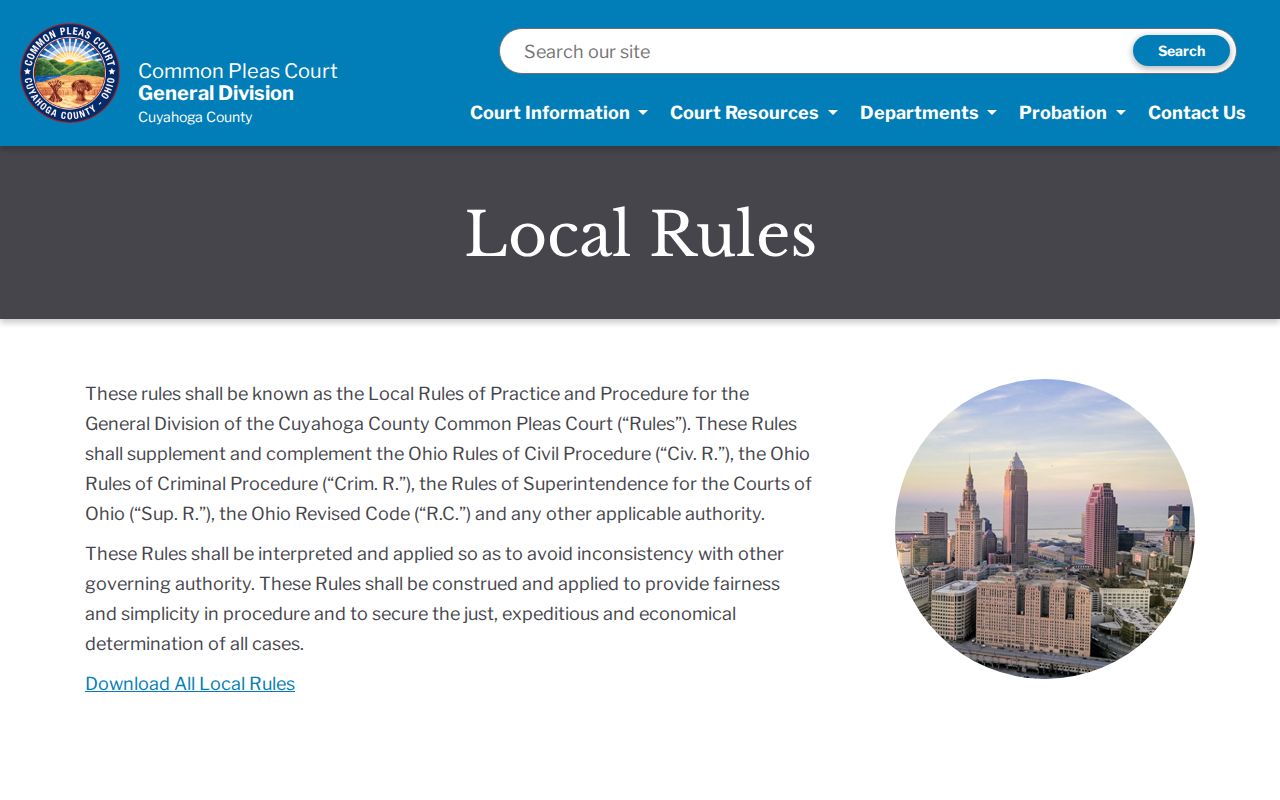
Those rules also explain why a case's procedural history lives with the Clerk-maintained criminal docket and the court assigned to it.
Criminal Dockets: What They Show
A Cuyahoga criminal docket is a running chronology. Expect the CR identity, public party or caption details, filing and hearing dates, motions, and orders. A judgment or sentencing entry appears if one exists. One caution: an entry can show that something happened without every document appearing online. When the exact result matters, read the order itself or get an official copy from the clerk.
| Case number | The Clerk's convention uses CR, year, and case number for Common Pleas criminal lookup. |
|---|---|
| Case activity | Indictment or charging filing, arraignment, written motions, pretrial, hearing, waiver, and continuance entries. |
| Setting | A listed date, time, and assigned court that should be confirmed for an imminent appearance. |
| Disposition | Plea, trial-related action, sentencing, judgment, or another recorded resolution; read the related entry rather than infer from status. |
| Documents | Public search information may appear even where an underlying image is not remotely available. |
The display can still look thin. Protected identifiers, restricted documents, and records excluded from online view all play a part, and the Clerk's e-filing FAQ separates account-based document access from the public docket search.
Cuyahoga Criminal Docket Timeline
Cuyahoga's local criminal-case-management rule sets the early pace for a Common Pleas felony. Arraignment should come within five days of indictment for a jailed person. It is 14 days for someone released on bond. Pretrial follows within seven or 14 days after arraignment, again depending on custody. Trials, where practicable, should occur within 30 days of pretrial. These targets give context for the dates you see on a docket.
Those intervals are local management targets, not guaranteed dates in a particular case. The clearest route through the record is indictment or charging entry → arraignment → pretrial → plea or trial → disposition or sentencing. A written speedy-trial waiver is incorporated in the docket and must be tied to a date certain. A continuance must be requested in writing, approved by the assigned judge, and reflected in the docket.
Note: A moved setting does not by itself establish that the criminal case ended.
Criminal Case Stages on the Docket
Most Cuyahoga felony dockets open with an indictment or charging filing. Arraignment comes next. The case is called and the plea process begins. From there, entries mark pretrial management, written motions, hearings, and court orders. If the case resolves, a judgment or sentence entry follows. It comes after a plea or trial event. A notice of appeal can point you to a second docket at the Court of Appeals of Ohio, Eighth Appellate District.
Docket flow: Indictment or charge › Arraignment › Pretrial › Plea or trial › Disposition › Sentencing
Read the entries in order. A pretrial is only a case-management setting, not an outcome. A sentencing date is a separate event, well past the arraignment that starts the Common Pleas felony path.
Cuyahoga Criminal Docket Courts
Ohio splits criminal work between two levels. Under the Ohio judicial-system structure, felonies travel the Common Pleas path. Municipal courts handle traffic and non-traffic misdemeanors. They can also hold preliminary felony hearings. That division trips up a lot of docket searches. A felony CR record sits with the Cuyahoga County Clerk. A misdemeanor or ordinance case usually stays with the municipal court that took it in.
Juvenile Court runs on its own system. It has its own access rules. Start at the official Juvenile Court entry page for anything juvenile-related. What the public can see depends on the case type. An empty result is not proof that no record exists.
Cuyahoga County Juvenile Court keeps its own official gateway for criminal-related and other court records.
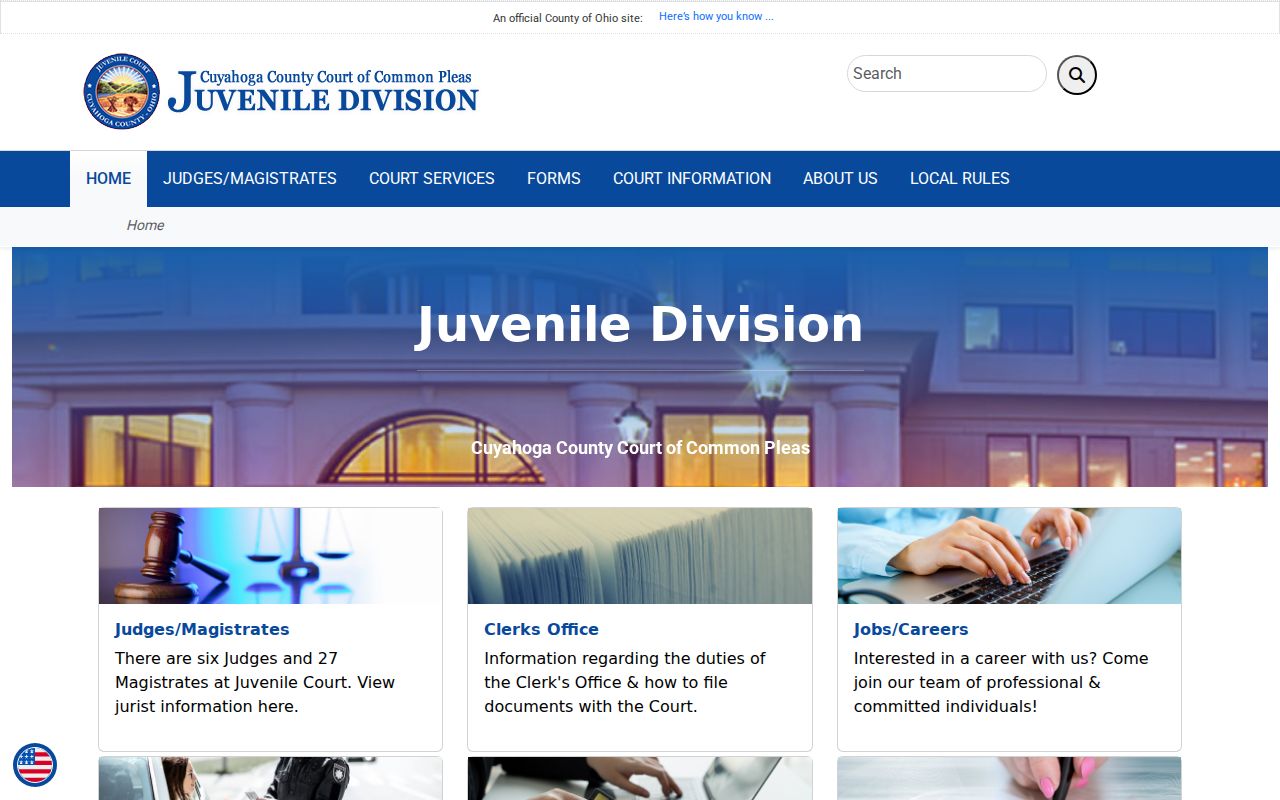
The separate Juvenile Court channel makes the lesson plain. Match the case type and the court before you run any criminal docket search.
Cuyahoga Criminal Clerk Access
The Criminal Clerk sits on the second floor of the Justice Center at 1200 Ontario Street, Cleveland, Ohio 44113. Call the criminal counter at 216-443-7999. For docket questions, the docket-information line is 216-443-7974. The Common Pleas contact directory lists every official court and Clerk channel in one place.
Why go in person? When a court date is near, the counter is the reliable route. The same goes when the online docket leaves gaps. Ohio's court-access rules treat direct access as the baseline. Remote publication does not have to carry every document or exhibit. Records held by another division, a municipal court, or Juvenile Court stay with those offices. Ask that office directly. Do not expect the Common Pleas Criminal Clerk to fetch a case outside its own system.
Cuyahoga Criminal Specialty Dockets
Specialty dockets move cases around without moving them. Joining a program can relabel events, add review dates, or set treatment conditions. It can also shift court dates. The underlying felony case stays put in Common Pleas. The official specialty courts directory names the Drug Court tracks: Traditional, Medication-Assisted Treatment, HOPE, and Recovery. The General Division local rules also spell out how cases get assigned to the Veterans Treatment Court Docket.
For the record itself, search the Common Pleas criminal case number through the Clerk's Criminal Search route. There is no separate public program search. Treatment details stay private. One public milestone: the court's official recertification notice reports that Veterans Treatment Court was recertified through December 2028.
The specialty courts directory shows which programs can affect scheduling. The criminal court docket remains the route to the case record itself.
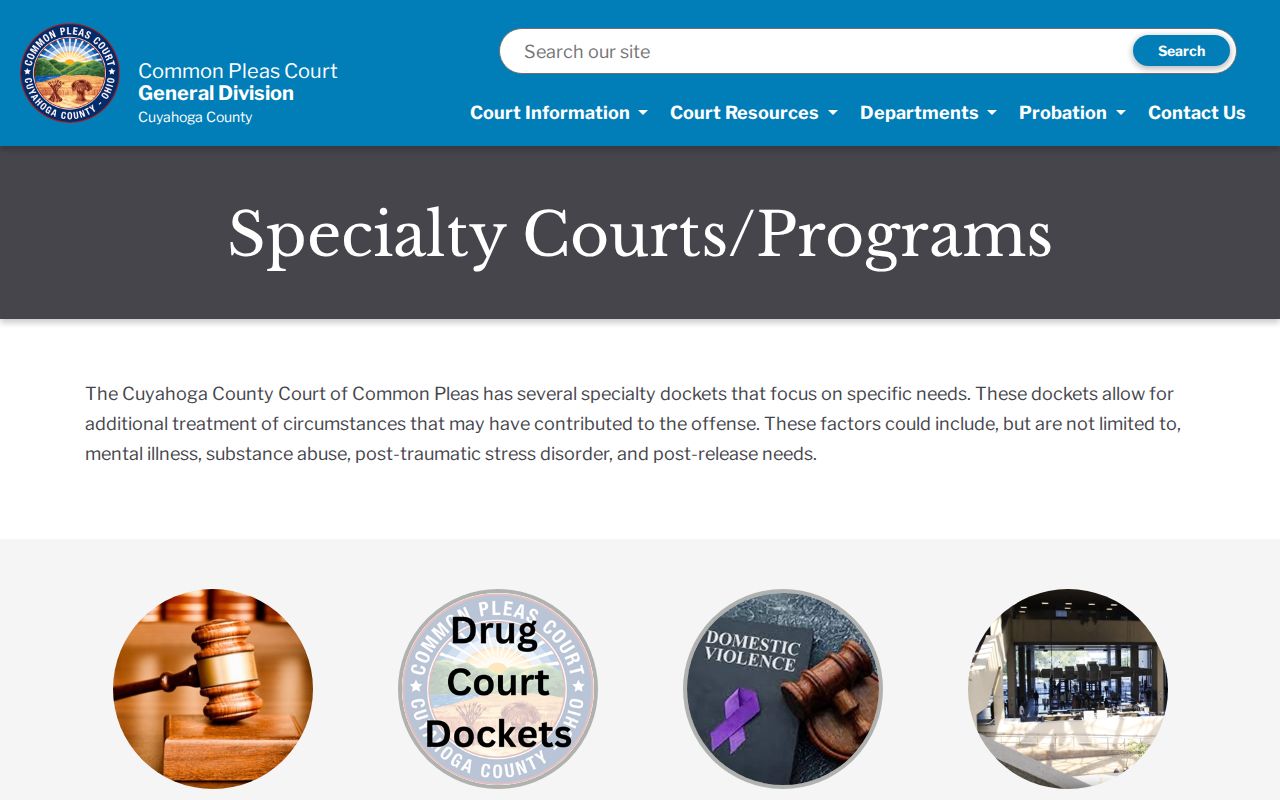
Program involvement can explain a review entry or an odd date on the calendar. Still, the underlying public criminal case record is what governs, not the program.
Access Rules for Criminal Dockets
Ohio Rules of Superintendence 11.10 through 11.12 presume court records are open. But remote access and direct access are not the same thing. The Cuyahoga Clerk calls online information a convenience. In-person records should be treated as current and accurate. Domestic Violence case information is kept off the internet search. That is federal law plus Domestic Relations Court direction. A separate restriction covers General Division civil stalking-protection-order records.
Sealed or expunged criminal information may be missing or restricted. It may be marked to hide the full history. Protected personal identifiers can be withheld too, along with court-restricted material. Need the status of your own case? The responsible court or clerk is the right channel for confirmation. For a broader look at routes and search fields, see the county's Docket Search reference.
Key Rules:
Ohio Rules of Superintendence 11.10-11.12 establish public court-record access while allowing courts to limit what is remotely available.
Ohio Revised Code 2303.12 requires the Common Pleas clerk to maintain the general docket and provides for specified online criminal-docket access, subject to exceptions.
Ohio Revised Code 2953.32 governs certain sealing and expungement applications and their record effects.
Cuyahoga Criminal Docket Images
Finding a case in the Case Records Search System is not the whole story. Not every filing image is there. The Clerk's e-filing materials limit attorney access to assigned cases. Law-firm support staff can view images only for their own e-filings. So e-filing is not the same service as the public criminal docket. Need an order, judgment, or complete filing? Ask the Criminal Clerk for the proper copy channel.
The Clerk's e-filing FAQ walks through registration. It covers role-based image access and electronic payment. It also explains the key difference between a confirmation number and actual Clerk acceptance.
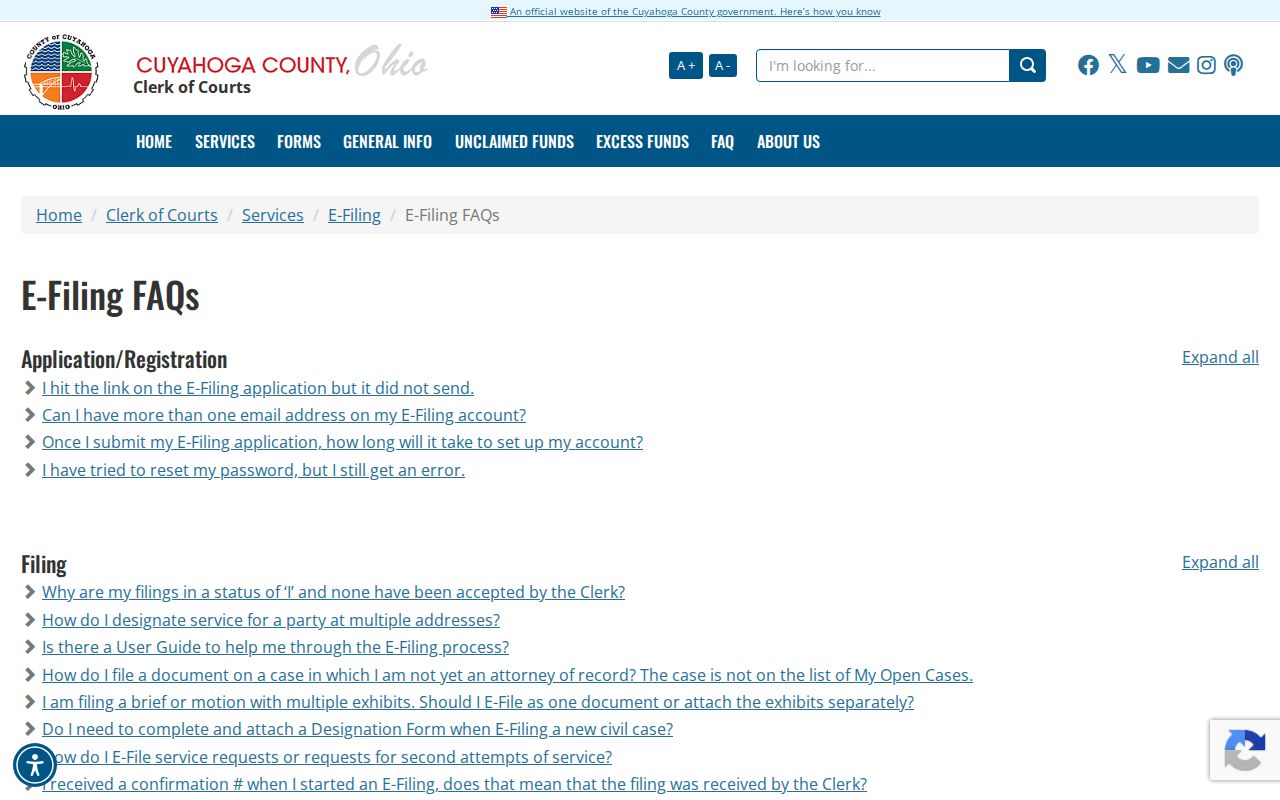
Let the docket identify the case and entry first. Then use the court's official copy process when a complete or certified criminal record is required. Note: An empty image link says nothing about the merits or outcome of a criminal case.