
How the Cuyahoga County Court Calendar Works
Cuyahoga County has no single calendar covering every court. The Clerk of Courts Case Records Search System handles docket lookups for Common Pleas. It covers civil, criminal, and appeal cases. Domestic Relations runs its own name-based calendar search plus separate scheduling contacts. Probate keeps a separate Web Docket. The Court of Appeals of Ohio, Eighth Appellate District, posts its own calendar archive. The municipal courts and Juvenile Court maintain separate systems too. Treat any posted calendar as a convenience, not a promise. The Eighth District says plainly that its calendar is accurate when posted. But it can change at the court's discretion. So check your court date again close to the hearing. Use the assigned court's scheduler, coordinator, or Clerk docket desk before you rely on it.
Cuyahoga Court Schedule Systems
Schedules in Cuyahoga County live in several places. The Eighth District calendar archive works by date. You pick a date and open a downloadable calendar PDF. There is no case-number search field there. For verification, the court tells a caller to dial 216-443-6350. Or check the web docket before relying on any listed item. So the appellate schedule is a useful but separate step. It sits apart from the trial docket underneath it.
Common Pleas works differently. Start with the Clerk's case record. The public selection page splits a docket search into Civil/Domestic, Criminal, and Court of Appeals routes. Probate sits outside that Clerk system and runs its own Web Docket. A municipal citation or misdemeanor stays with the municipal court that received it. Routing the case correctly matters more than hunting through every calendar at once.
The Eighth District calendar page posts the court's upcoming hearing calendars. It also carries a verification notice.
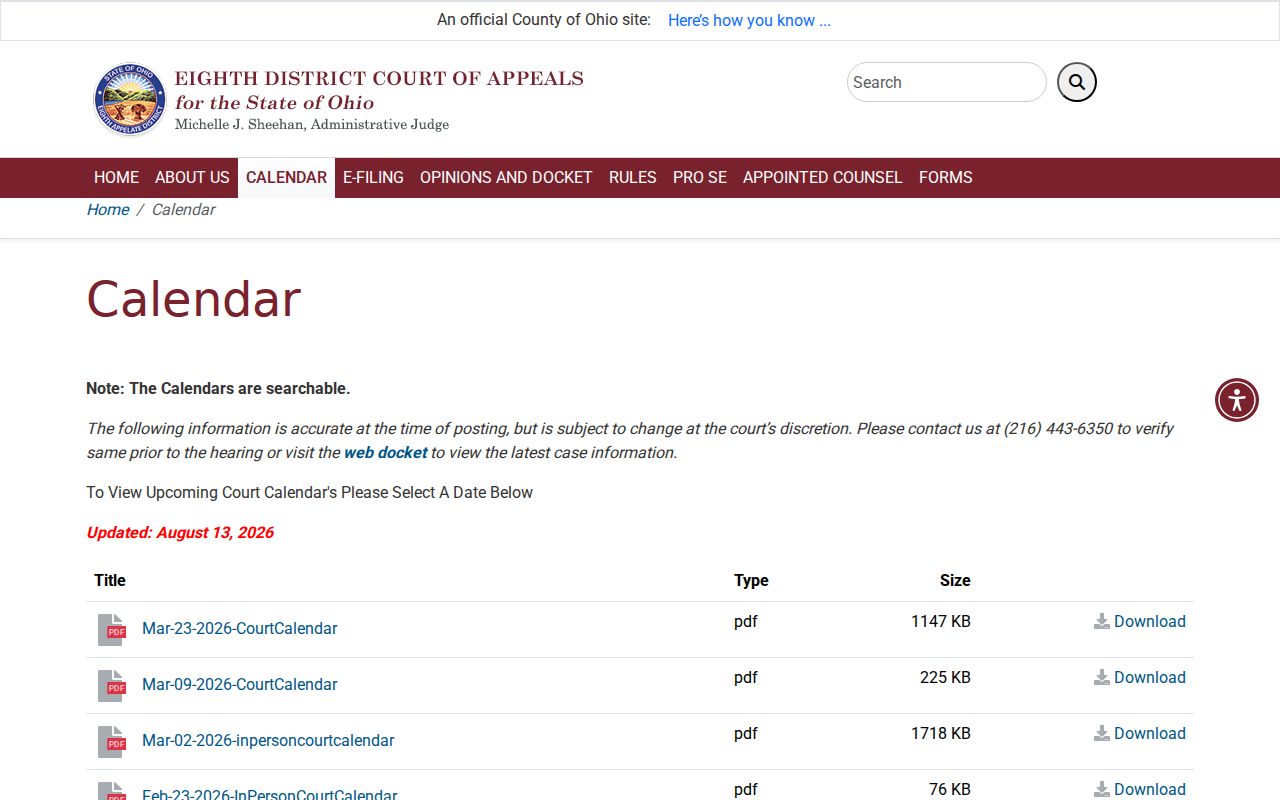
The court's own warning explains the risk. A dated PDF or calendar entry should never be the last check before an appearance.
Cuyahoga County Court Date Lookups
Start with the court that holds the case. For a Common Pleas civil, criminal, or appeal case, the Clerk Case Records Search System is the lookup tool. Domestic Relations works differently. Its name calendar tool demands at least three letters of both the first and last name. A company name works too. Treat it as a supplemental calendar search, not the full official record.
- Identify the court level and use its online docket or calendar channel to locate the case or calendar entry.
- Search by case number when known, or use the available name fields and court-specific categories.
- Read the next setting and any recent motion or order that may have moved it.
- For Common Pleas, call the relevant Clerk counter or docket desk; for Domestic Relations, use its scheduling or docket line.
- Check posted courtroom or courthouse information where the assigned court provides it, and confirm the date with the party's attorney when represented.
There is no Ohio statewide individual-case portal to replace these court-specific channels.
Cuyahoga Domestic Court Calendar
Domestic Relations offers a simple chain for a date check. Search by name where permitted. Review the Clerk record for the complete case. Then call the right office to confirm. Assignment and Scheduling answers at 216-443-8801. The Clerk Docket desk is 216-443-7960, and domestic-violence scheduling is 216-443-8286. The court's general contact page lists direct division services as well. The Domestic Relations calendar search asks for First Name, Middle Initial, and Last Name. Its instructions say to enter at least three letters of the first and last name. A company name works too.
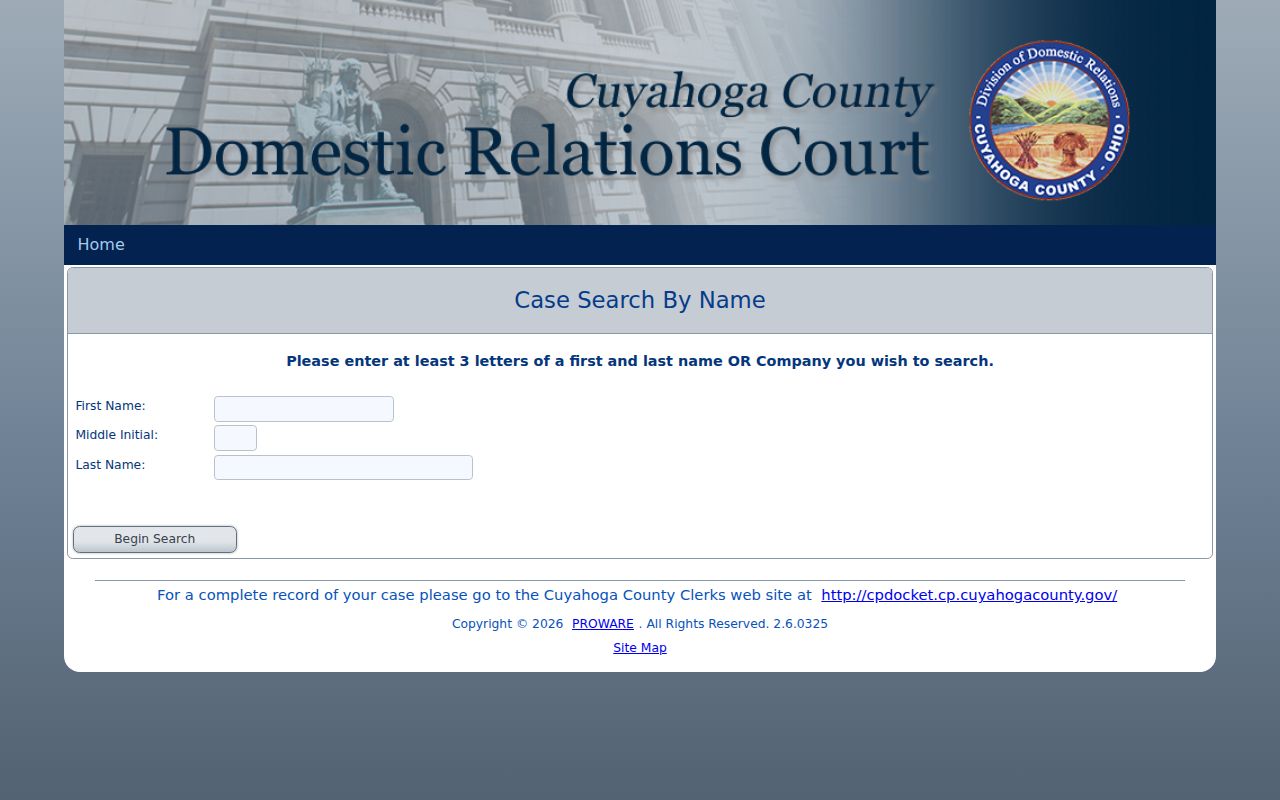
The limited name form is a good calendar lead. For a complete record, the Clerk's docket remains the route.
Court Settings: What Each Field Means
Read a setting line as a current event, not a forecast of the result. The date and time pin down the scheduled appearance. The assigned court, judge, courtroom, or division tells you where the event belongs. The setting type describes what is expected there. It may be an arraignment, pretrial, motion hearing, case-management conference, final pretrial, trial, status conference, or sentencing.
| Date | The scheduled calendar day; it can change through a later docket entry or order. |
|---|---|
| Time | The time listed for the setting or docket call; confirm the current entry close to appearance. |
| Court or courtroom | The assigned court location or division shown for that case, not a countywide default. |
| Judge | The presiding judge or assigned court tied to the event. |
| Setting type | The purpose of the event, which can be management, hearing, trial, disposition, or appellate argument. |
Cuyahoga Court Schedule Terms
Local schedule labels mean different things. An arraignment is the early felony hearing after indictment. The case is called there and the plea process begins. A pretrial is criminal case management, not a judgment. A CMC is a civil case-management conference used to build or adjust a schedule. A motion hearing takes up a filed request. A status conference checks progress and may set another date.
- Final pretrial
- A later trial-readiness setting, not the jury trial itself.
- Trial
- An evidentiary proceeding that can move by approved continuance or order.
- Sentencing
- A criminal disposition-stage setting after a plea or verdict.
- Appeals calendar
- The Eighth District's separately posted argument or session calendar.
One commercial-docket judge sets a first CMC automatically, roughly six weeks after filing, to allow time for service. That CMC then leads to a scheduling order. It is a local example, not a universal date rule.
When a Court Date Moves
Criminal cases in Common Pleas do not move on a phone call. A continuance needs a written motion. It also needs the assigned judge's approval. A docket entry must record the change. The written speedy-trial waiver is incorporated by reference and must run to a date certain. Trust three things when a Cuyahoga County court date shifts. They are the motion, the order, and the new setting on the docket. One old calendar entry quietly disappearing means nothing on its own.
Civil schedules work the same way, through orders and court direction. A CMC can produce a scheduling order. A trial continuance rests with the judge. Pull the current case docket for later activity. If the date is close or the display looks confusing, call the assigned court.
Why do several criminal dates cluster together? The rule's early intervals explain it. A jailed person gets an arraignment target within five days of indictment. For someone released on bond, it is 14 days. Pretrial targets sit seven or 14 days after arraignment, depending on custody. These are case-management targets. They do not promise that any particular court date will hold.
Note: a reset or cancellation alone is not a dismissal or final disposition.
Cuyahoga Court Date Confirmation
Confirming a Cuyahoga County court date means calling the right desk. The Clerk's system and docket desk handle the case-record side. Questions about a court's own schedule go to that court's scheduler or coordinator. Domestic Relations separates the two plainly. It has an Assignment and Scheduling line and a Clerk Docket line. For General Division records, the Common Pleas directory lists two counters. The civil counter is 216-443-7950. The criminal counter is 216-443-7999. The Domestic Relations contact information page shows its scheduling, docket, and court service contacts.
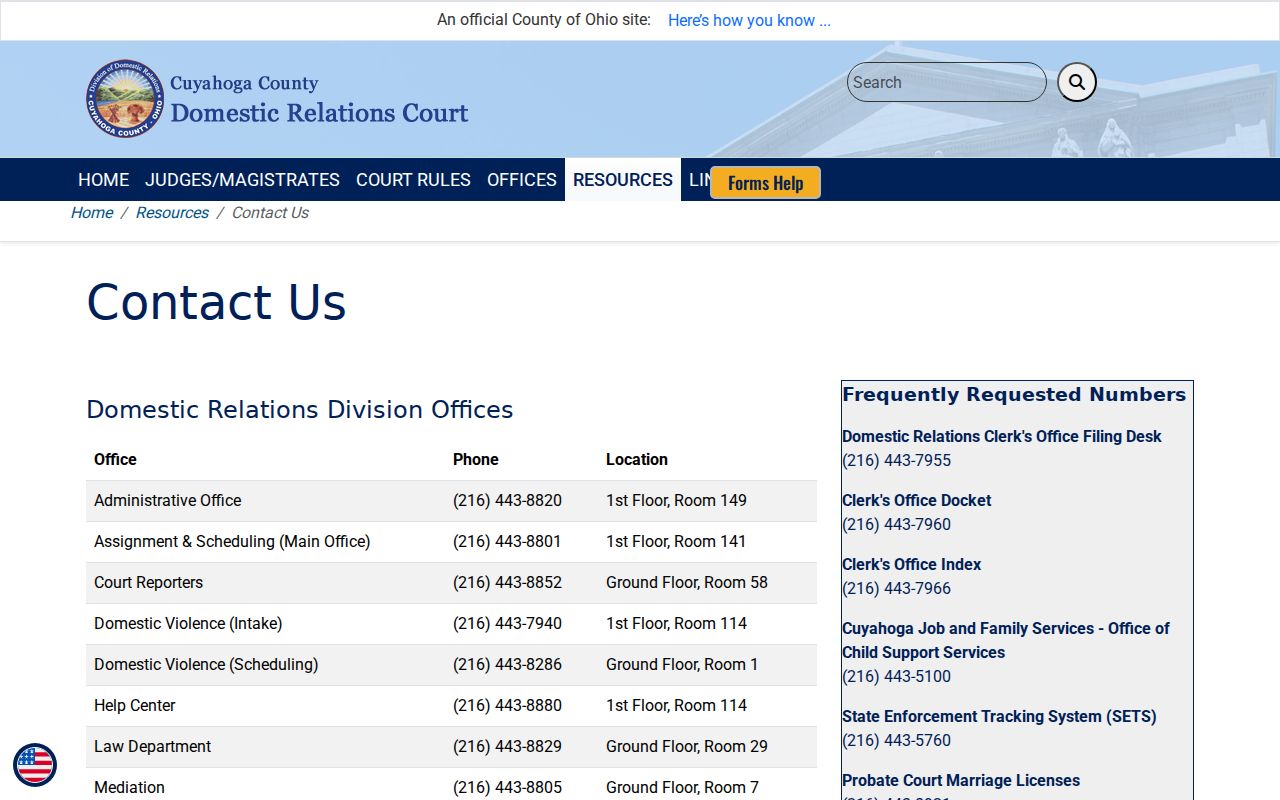
Those separate phone routes beat guessing from a stale calendar display. Call and confirm directly.
Cuyahoga Criminal Court Schedule Changes
Specialty courts can relabel reviews and change conditions. They can also shift court dates. The underlying felony case stays where it was. Cuyahoga's official specialty-courts information names Drug Court's Traditional, Medication-Assisted Treatment, HOPE, and Recovery dockets. Veterans Treatment Court earned recertification through December 2028. None of these programs creates a separate public case-record system. A Cuyahoga County criminal docket can simply look different because of one. The Veterans Treatment Court recertification notice is the official source for that update.
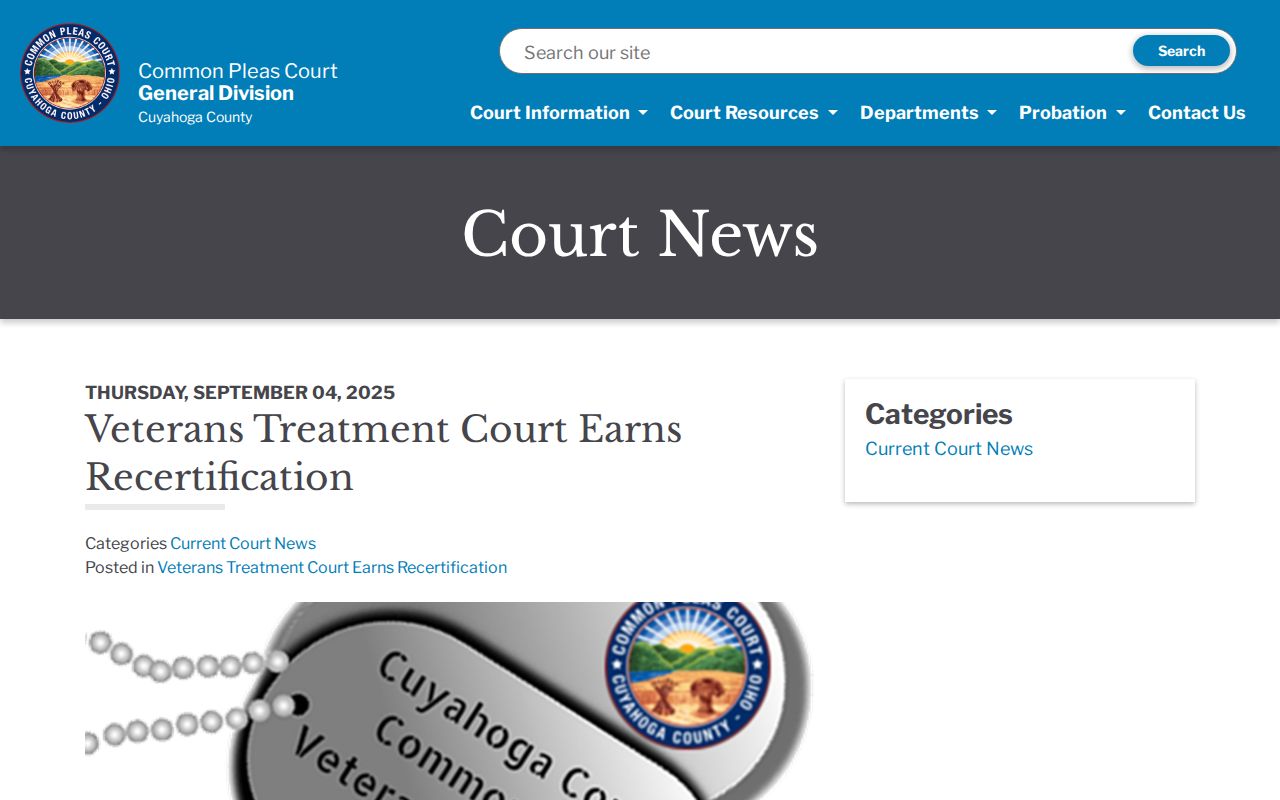
A program name alone tells you little. Check the underlying criminal case docket and the assigned court for the real next setting.
Missed Settings and What Comes Next
Miss a Cuyahoga County court setting? Act fast. Review the current docket, and tell your attorney if you have one. Call the Clerk or the court scheduling channel that handles the case. A missed criminal appearance can carry serious consequences. What happens next depends on the case. Only the court record and the responsible court can say. They confirm whether a new date, an order, or some other action has been entered.
Noncriminal hearings follow the same sequence. Locate the current docket. Note the court and case number. Contact the assigned division or Clerk. Do not read a result into a missed calendar entry. Domestic Relations, Probate, municipal courts, and the Eighth District each keep their own records. The channel responsible for that particular case is the only one that can confirm the date.
Missed a Setting? A missed criminal court date can lead to a failure-to-appear action, warrant, or bond consequence depending on the case and court order.
Check the current docket and contact the court, Clerk, or attorney immediately to confirm the next required step.
Do not rely on an earlier calendar screen when deciding whether to appear or seek a new setting.
The Ohio eStats interface tallies court statistics statewide rather than listing any single Cuyahoga County court date or docket entry.
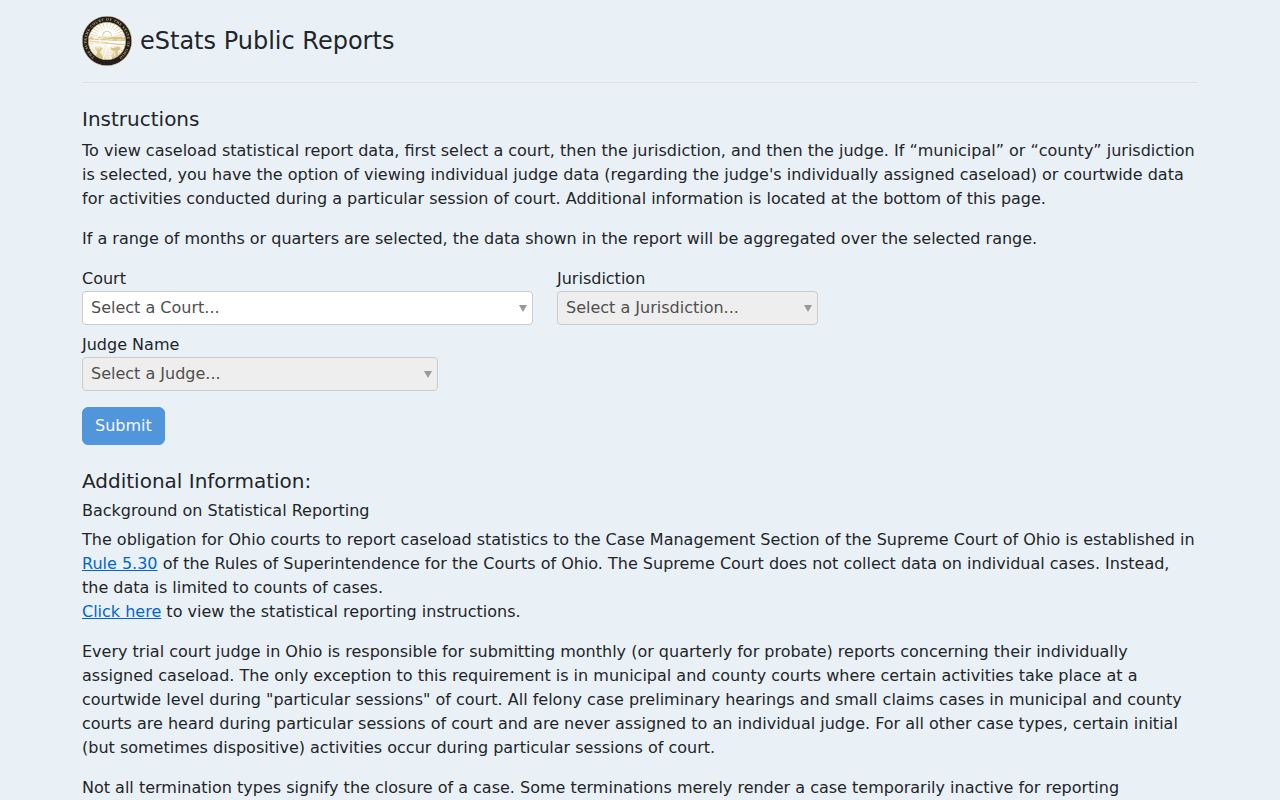
Statistics describe workload. They cannot verify a hearing setting. For that, you need the court-specific docket. You also need direct confirmation from the court. Keep the case number, court name, and most recent docket date handy. Have those details ready when you call. They let the court find the correct schedule record fast.